
Perpetual futures contracts are becoming more and more popular. They offer long or short price exposure without ownership or a scheduled expiry.
But this flexibility can involve liquidation risk, especially when you use leverage. And many do.
So, what are perps in trading? They’re contracts that let you trade an asset’s price instead of buying and owning crypto at its spot price.
I’ll explain how they work, what their advantages are, and the main risks you need to be aware of.
Let’s get into it!
Key highlights:
- Perpetual futures track crypto prices without a set expiry date, but don’t give you ownership of the underlying token
- Traders use perps for long or short exposure and to hedge existing holdings
- The funding rate can affect holding costs, and rates and payment direction vary by contract
- Leverage magnifies losses as well as gains
- Maintenance margin helps determine liquidation risk; check contract rules, platform risks, and US eligibility before trading
What are perpetuals in crypto, and how do they compare with spot?
Perpetual futures contracts, or perps, are derivatives linked to assets such as Bitcoin or Ethereum. Their value follows the underlying market and generally tracks the spot price, though the contract price can differ.
A long position benefits when the price rises, while a short position benefits when it falls. But you don’t get Bitcoin or Ethereum to withdraw into your wallet.
Perps, spot trades, and dated futures at a glance
The practical differences start with what you hold.
| Feature | Unleveraged spot | Perpetual futures | Dated futures |
| What you hold | The underlying asset, bought through spot trading | A derivative position | A derivative position |
| Expiry | None | No expiration date | Scheduled expiry |
| Margin | No borrowed exposure | Collateral required | Collateral usually required |
| Main costs | Trading fees | Fees and funding | Fees and settlement-related costs |
Unlike traditional futures, perps in crypto have no expiration date. Traditional futures have a set expiry and may settle at a price different from the spot price.
Some contracts are cash settled, but settlement and collateral conventions depend on the contract.
Put simply, spot ownership and derivative exposure create different obligations. With perps, you must monitor the position’s collateral throughout the trade.
Why do traders use perpetuals in crypto?
One common use is taking short exposure without borrowing tokens for a spot sale. Another possible use is capital efficiency, controlling a larger position with less upfront collateral, though that can increase risk.
Perps can also support hedging existing holdings. A Bitcoin holder might use a short BTC position to offset some losses if Bitcoin falls.
That hedge has limits. Funding, position sizing, collateral changes, and liquidation can all affect the result. These are uses for the product, not reasons to assume it’s suitable for you.
How funding rates and leverage work
In perpetual futures, an index price tracks the spot price across underlying markets. A mark price is a venue-calculated reference that may determine unrealized profit and loss and trigger liquidation.
Those prices can be different from the last traded price.
Funding can change the cost of holding a position
The funding rate is a recurring payment between traders that helps keep perpetual prices near the spot price. When the funding rate is positive, long positions are paying short positions, and the opposite applies when the funding rate is negative.
It’s separate from trading fees, and the rate can change.
Check the current funding rate, payment direction, and next settlement time. Our guide to Bitcoin funding rates also explains their connection to market positioning.
Receiving funding doesn’t guarantee a profitable trade. Price losses can exceed those payments.
Leverage can bring liquidation closer than expected
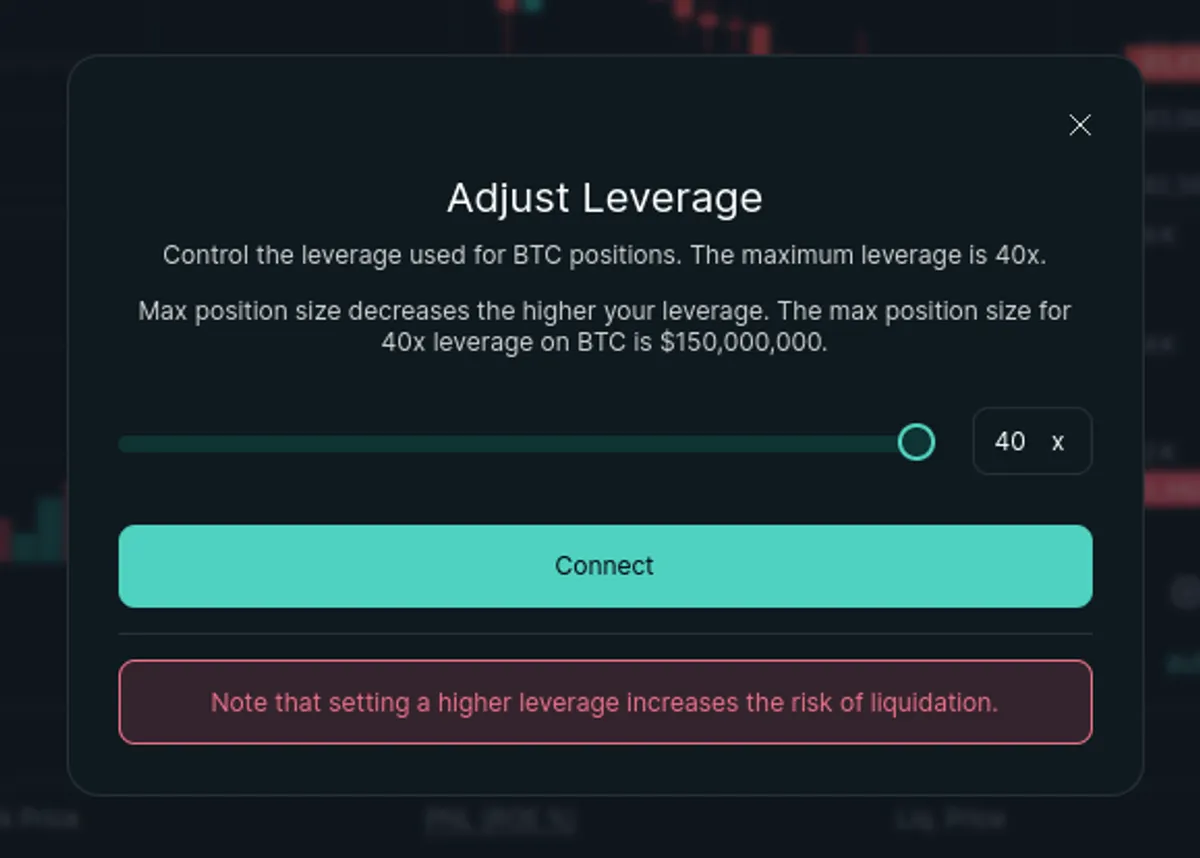
Initial margin is the collateral needed to open a position. Maintenance margin is the minimum equity required to keep it open.
Here’s what happens with $1,000 of margin and 10x leverage:
- You control a $10,000 position
- At this level, a 1% move produces roughly $100 of profit or loss before costs
- A 5% adverse move means roughly a $500 loss. That’s half your starting margin
The trigger point depends on maintenance requirements, margin mode, fees, funding, and venue rules.
A last traded price above your liquidation threshold doesn’t guarantee safety when the venue uses mark price.
Also, venues don’t all calculate the price the same way.
Why perps are growing, and where traders find them
Perpetual futures remove the need to manage an expiration date or repeatedly replace expiring contracts, unlike traditional futures. They also combine long and short trading with adjustable exposure.
That’s a practical reason traders pay attention to them, though arbitrage between venues isn’t risk-free or guaranteed to keep prices aligned. It doesn’t establish perps as the fastest-growing product across every crypto market.
If you’re researching what are perps in crypto, the next question is where perpetual futures contracts trade. Binance and Bybit are centralized examples, while Hyperliquid and Lighter are examples of decentralized trading onchain.
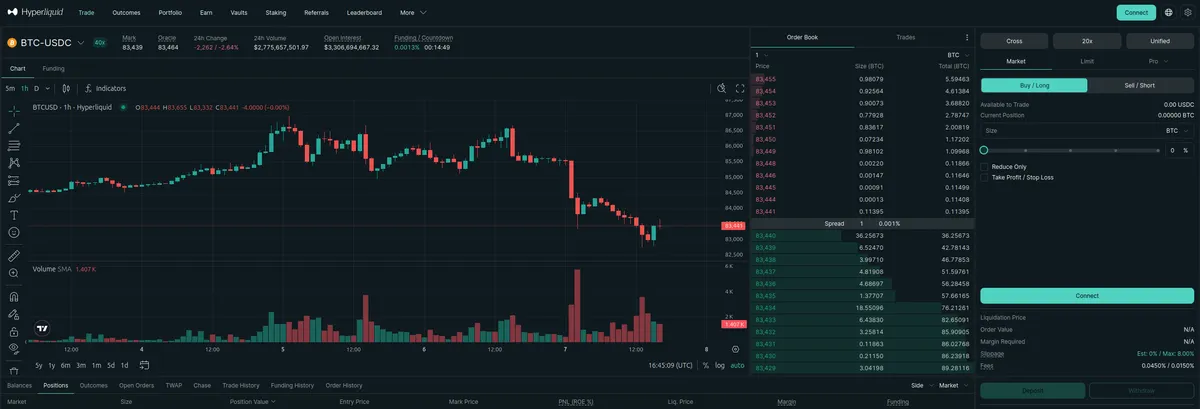
Hyperliquid is currently the most popular decentralized crypto perps platform.
Centralized and onchain platforms have different trade-offs
Centralized platforms may offer familiar account tools and simpler onboarding for some users. But funds held with an exchange carry custody and counterparty risk, and leverage and liquidation rules can vary.
Onchain platforms may offer crypto wallet-based access and more transparent settlement. They can also introduce smart-contract, oracle, bridge, and liquidity risks.
But self-custody doesn’t remove every dependency. Your position still depends on the platform’s settlement, pricing, and risk systems.
Neither model guarantees that you can exit during market stress. Access rules also vary, so don’t assume these platforms are available to US residents.
Check contract details before choosing a venue
Compare trading fees, supported collateral, liquidity, maintenance-margin tiers, settlement terms, and funding cadence. Some contracts may be cash settled, but check each contract’s actual settlement and collateral terms.
For example, dYdX documentation describes hourly funding calculations. Other contracts can follow different schedules, and platform rules can change.
Check current documentation and local eligibility before opening an account. A familiar platform name isn’t enough to establish that a particular contract fits your needs.
The main risks of crypto perps explained
Understanding crypto perps means understanding the risks of perpetual futures. Leverage-driven losses and liquidation are only part of the picture.
Funding can become expensive. Slippage can make an exit worse than expected, especially in thin markets. Sudden price gaps can move through intended exit levels.
Market manipulation may also be a concern on some venues. Exchange failures, protocol bugs, oracle problems, and outages can affect your ability to close a position.
The Commodity Futures Trading Commission (CFTC) outlines these concerns in its CFTC’s virtual currency risk advisory. It warns about virtual-currency futures and leveraged exposure.
A simple checklist before placing a perp trade
Use this risk management checklist before entering an order:
- Which asset does the contract track, and what collateral backs your position?
- What is the current funding rate, who pays whom, and when is the next settlement?
- Which mark price and maintenance-margin rules determine liquidation?
- What trading fees, slippage, and forced-close costs could apply?
- What happens to orders and positions if the venue or protocol has an outage?
If those answers aren’t clear, stop. A demo environment can help you learn order behavior without committing capital.
Treat maximum leverage as a limit, not a target
A platform’s highest leverage setting isn’t a good default. Start by understanding how position size, initial margin, and price moves affect account equity.
Isolated margin generally allocates collateral to one position. Cross margin can draw on shared account collateral. Make sure to check the exact rules before choosing either mode.
If you proceed, consider a small position with little or no added leverage. Set a maximum loss, but don’t assume a stop order guarantees its execution price.
Never commit money needed for rent, bills, or other essentials. These precautions reduce certain risks, but they don’t make perps safe.
The bottom line: Understand the contract before taking the exposure
Perpetual futures let you trade ongoing crypto price exposure without owning the underlying asset or managing a scheduled expiry. That gives you flexibility, but it comes with obligations you don’t face when holding unleveraged spot crypto.
Position size matters, as do funding, maintenance margin, and platform reliability. A correct price prediction can still end in a loss if leverage or those details work against you.
Understand the contract before committing funds. No expiry date means one less deadline to manage, not protection from liquidation.
If you’re serious about crypto trading, you can find the best tools in our guide:
Best Crypto Tools For Analysis, Trading & Research
Frequently asked questions
Can you lose more than your initial margin on a perp?
It depends on the venue’s contract, margin, and liquidation rules. With cross margin, more of your account collateral may support a losing position. Don’t assume every platform guarantees losses stop at the initial margin posted for that trade.
Do you pay funding every time you trade a perp?
The funding rate generally applies to eligible positions open at specified settlement times, rather than every order. Trading fees are separate and can apply when orders execute.
Check the contract’s eligibility rules and timing instead of assuming that a short holding period avoids funding.
Are perps the same as margin trading?
Not quite. Both can create leveraged exposure, but the underlying products are different.
A perp is a derivative contract. Spot margin trading usually involves borrowing assets to buy or sell crypto. Spot margin may carry borrowing interest, while perps use their own funding and collateral rules.
What are perps on Kalshi?
Perps on Kalshi are perpetual futures offered separately from its better-known prediction markets.
Instead of trading a Yes/No event outcome, you take continuous long or short price exposure to supported assets such as Bitcoin and Ethereum. Kalshi also uses a separate margin account for perpetual futures trading.
What are perps on Polymarket?
Perps on Polymarket are separate from the platform’s prediction markets. They let you trade leveraged long or short positions based on the prices of crypto, stocks, indices, and commodities rather than betting on whether an event will happen.
Polymarket currently offers dozens of perpetual markets across these asset categories.
What are perps in Phantom?
Perps in Phantom are perpetual futures accessed through the Phantom wallet or Phantom Terminal and powered by Hyperliquid.
Your margin and profit or loss are denominated in USDC, while Phantom provides the interface for opening and managing positions. Existing Hyperliquid balances and positions can also appear inside Phantom when linked to the same account.
What are perps in MetaMask?
Perps in MetaMask are perpetual futures that you can trade directly through the MetaMask mobile app or browser extension.
The service is powered by Hyperliquid, with MetaMask acting as the interface for opening and managing leveraged long or short positions.