
Imagine playing your favorite video game and actually earning money while doing it. Sounds like a dream, right? Well, that’s exactly what GameFi is making possible.
GameFi, short for “Game Finance,” is a mix of gaming and decentralized finance (DeFi). It allows players to earn cryptocurrency and real-world value while playing blockchain-based games. These games reward players with tokens, NFTs (non-fungible tokens), and other assets that can be traded, sold, or used in-game.
GameFi is changing the gaming world by giving players full control over their in-game assets. Unlike traditional games where everything is owned by the company, in GameFi, YOU own your items, characters, and even land inside the game.
But how does all of this work? Let’s break it down.
How Does GameFi Work?
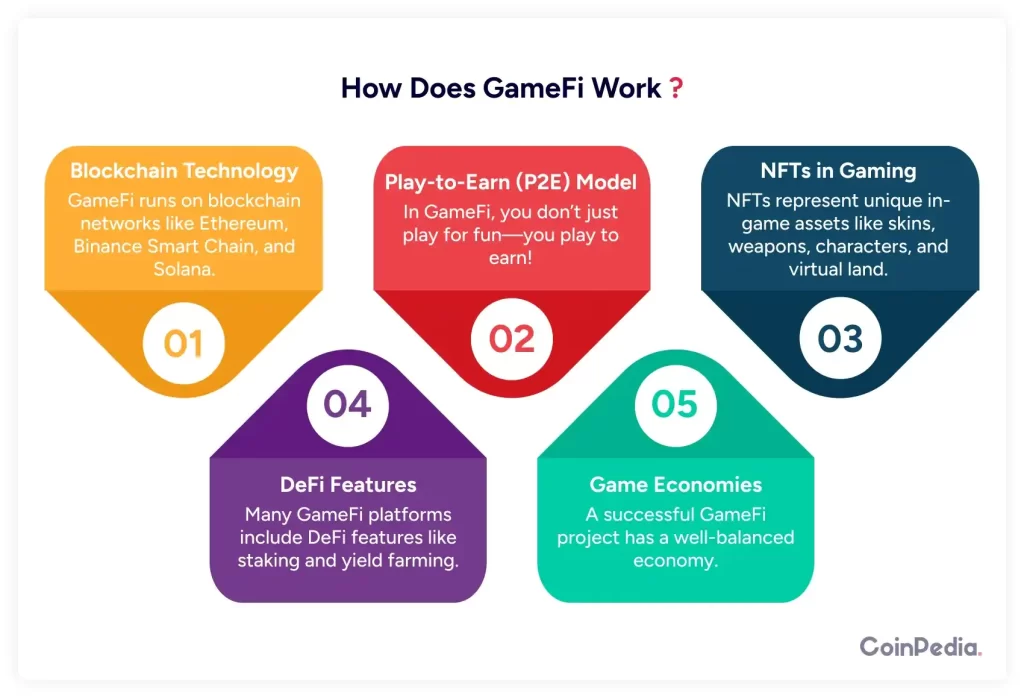
GameFi combines blockchain technology, NFTs, and play-to-earn (P2E) mechanics to create a new gaming ecosystem.
Here’s how the pieces fit together:
A. Blockchain Technology
GameFi runs on blockchain networks like Ethereum, Binance Smart Chain, and Solana. This makes everything transparent, secure, and decentralized. No one can just take away your items or shut down your account like in traditional games.
B. Play-to-Earn (P2E) Model
In GameFi, you don’t just play for fun—you play to earn! Completing missions, winning battles, or just playing regularly can earn you cryptocurrency. You can then trade these tokens for real money or reinvest them in the game.
Example: In Axie Infinity, players breed, battle, and trade creatures called Axies. Winning battles earns them Smooth Love Potion (SLP), which they can exchange for real-world money.
C. NFTs in Gaming
NFTs represent unique in-game assets like skins, weapons, characters, and virtual land. Unlike traditional gaming items, NFTs are owned by the player and can be sold or transferred outside the game.
Example: Decentraland lets players buy, sell, and build on virtual land. Some plots have sold for millions of dollars!
D. DeFi Features
Many GameFi platforms include DeFi features like staking and yield farming. Players can stake their earned tokens to generate passive income or lend them out for interest.
Example: The Sandbox allows players to stake their $SAND tokens and earn rewards while contributing to the game’s ecosystem.
E. Game Economies
A successful GameFi project has a well-balanced economy. Too many rewards and the tokens lose value; too few, and players lose interest. Developers carefully design tokenomics to keep players engaged and the economy sustainable.
The Rise of GameFi
GameFi exploded in popularity in 2021, driven by the success of Axie Infinity. Players in countries like the Philippines started making more money playing the game than they did at their regular jobs!
Major companies and investors have taken notice. Big names like Ubisoft and Animoca Brands are investing in blockchain gaming, and even traditional gaming companies are looking for ways to incorporate blockchain technology.
GameFi is more than just a trend—it’s a shift in how people think about gaming. But it’s not all sunshine and rainbows. Let’s look at some of the pros and cons.
Pros and Cons of GameFi
Pros
- Earn While Playing – Players can turn their gaming hours into real-world earnings.
- Ownership of Assets – Unlike traditional games, you actually own your in-game items.
- Decentralization – No central authority can take away your assets or ban your account.
- New Financial Opportunities – Staking, lending, and renting NFTs create additional income streams.
- Community-Driven Development – Many GameFi projects are built with community input, giving players a say in game development.
Cons
- High Entry Costs – Some games require expensive NFTs to start playing.
- Market Volatility – Crypto prices can be unpredictable, making earnings unstable.
- Scams and Rug Pulls – Not all GameFi projects are legit. Some developers abandon projects after raising funds.
- Balancing Challenges – If rewards are too high, the game economy can collapse. If they’re too low, players leave.
GameFi has great potential, but it’s still evolving. So, what are the biggest platforms leading the way?
Examples of Popular GameFi Platforms
A. Axie Infinity
- One of the first major GameFi successes.
- Players collect, breed, and battle Axies.
- Earn Smooth Love Potion (SLP) tokens.
B. The Sandbox
- A virtual world where players buy land, create experiences, and trade NFTs.
- Uses $SAND tokens for transactions and governance.
C. Decentraland
- A decentralized virtual world where players can buy and develop land.
- Uses MANA tokens to buy property, wearables, and services.
D. Gala Games
- A gaming ecosystem with multiple blockchain games.
- Rewards players with GALA tokens for participating.
The Future of GameFi
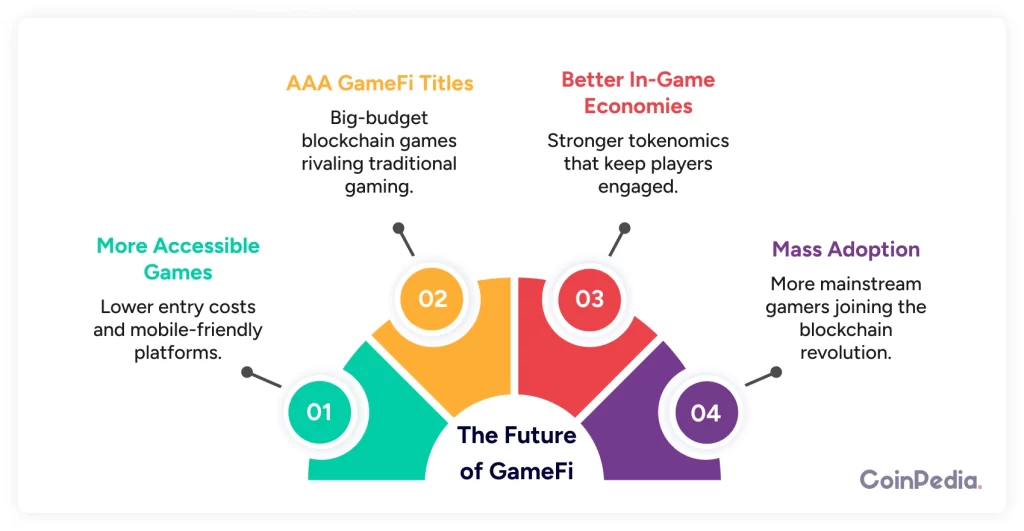
GameFi is still young, but its potential is massive. As technology improves, we could see:
- More Accessible Games – Lower entry costs and mobile-friendly platforms.
- AAA GameFi Titles – Big-budget blockchain games rivaling traditional gaming.
- Better In-Game Economies – Stronger tokenomics that keep players engaged.
Mass Adoption – More mainstream gamers joining the blockchain revolution.
Major gaming companies are already exploring blockchain integration. Ubisoft and Square Enix have shown interest in GameFi, and more companies could follow.
Is GameFi for You?
If you love gaming and want to earn crypto while playing, GameFi could be a great opportunity. But keep in mind:
- Research the game and its economy before investing.
- Be aware of scams and projects with weak tokenomics.
- Understand that earnings can fluctuate with the crypto market.
It’s not just about making money—it’s about being part of a new gaming revolution.
To conclude, GameFi is changing the gaming industry, merging entertainment with financial opportunities. With blockchain technology, players now have real ownership of their in-game assets and the ability to earn while having fun.
Whether you’re a gamer, investor, or just curious, GameFi is worth keeping an eye on. As the industry grows, new innovations will continue shaping the future of gaming and finance.
Never Miss a Beat in the Crypto World!
Stay ahead with breaking news, expert analysis, and real-time updates on the latest trends in Bitcoin, altcoins, DeFi, NFTs, and more.
FAQs
GameFi, or “Game Finance,” merges gaming and blockchain technology, allowing players to earn cryptocurrency through play-to-earn (P2E) mechanics and NFTs.
GameFi makes money through in-game transactions, NFT sales, staking, and tokenomics, where developers earn fees from trades, asset sales, and game activities.
GameFi isn’t strictly gambling, but some models rely on luck-based mechanics. Unlike gambling, players can own, trade, and earn assets with real-world value.
Yes, GameFi is evolving, with major companies investing in blockchain gaming. Its future depends on improved game quality, sustainable economies, and adoption.
GameFi risks include market volatility, scams, high entry costs, and unbalanced economies. Researching projects before investing is essential to avoid losses.