
Close Menu
CryptoDispatchDaily.comCryptoDispatchDaily.com
    What's Hot

    Stablecoin platform Bridge wins conditional approval for national trust bank charter

    February 18, 2026

    Galaxy Digital Shares Rise Following $323M Q3 Profit, New $200M Buyback Plan

    October 27, 2026

    MANTA Price Prediction 2026, 2027, 2028-2032

    March 14, 2026
    Facebook X (Twitter) Instagram
    • About Us
    • Contact Us
    • Privacy Policy
    • Terms and Conditions
    Facebook X (Twitter) Instagram
    CryptoDispatchDaily.comCryptoDispatchDaily.com
    • News

      Cardano core teams near autonomy as IOG names latest partners

      November 10, 2026

      Zcash Activates NU7 With 25-Second Block Target and New Fee Reserve

      November 7, 2026

      Solana Labs Launches Leap Trading App for Tokenized Stocks, ETFs and Crypto

      November 6, 2026

      Stand With Crypto eyes most pro-Bitcoin Congress in 2026

      November 3, 2026

      Crypto Bank Custodia Urges Supreme Court to End ‘Tyranny’ of Federal Reserve

      November 2, 2026
    • Technology

      Gnosis Chain Adopts Ethereum’s Fast Confirmation Rule

      November 10, 2026

      Keplr Wallet Hack Hits Google and Apple Users as Recovery Begins

      November 9, 2026

      Can companies stop third parties trading tokenized US shares?

      November 8, 2026

      Polygon Governance Call Takes Up Recovery Fork for Polymarket and Binance Hack Funds

      November 6, 2026

      Democrats eye crypto market structure bill with wider SEC role

      November 5, 2026
    • Learn/Guide

      How Crypto Exchanges Make Money: Revenue Statistics and Fee Breakdown (2026)

      November 10, 2026

      How Long Does a Bitcoin Transaction Take? Fees and Confirmation Times

      November 9, 2026

      What Happens When a Cryptocurrency Reaches Its Maximum Supply?

      November 8, 2026

      Crypto Rug Pull Statistics: How Common Are They in 2026?

      November 7, 2026

      Why Crypto Exchanges Show Different Prices: The Statistics Behind It

      November 6, 2026
    • Regulation

      69% of the Top Agent’s Failures Are Evidence and Reasoning Errors

      November 10, 2026

      How GPT-5.6 Sol Won CyberArena’s Live Attack-and-Defense Benchmark

      November 9, 2026

      Kimi K3.1 Pro Open Weights vs the API: What Each Option Actually Lets You Do

      November 8, 2026

      How a Tensor-Name Test Undermined the 7.72TB “Anthropic” Checkpoint on Hugging Face

      November 7, 2026

      Mastercard Reportedly Praises RLUSD Stablecoin at XRPL Event

      November 6, 2026
    • Live Pricing Chart
    CryptoDispatchDaily.comCryptoDispatchDaily.com
    Home » Grayscale Presses Senate to Advance CLARITY Act Before Break
    Regulation

    Grayscale Presses Senate to Advance CLARITY Act Before Break

    July 31, 20264 Mins Read
    Facebook Twitter Pinterest LinkedIn Tumblr Email
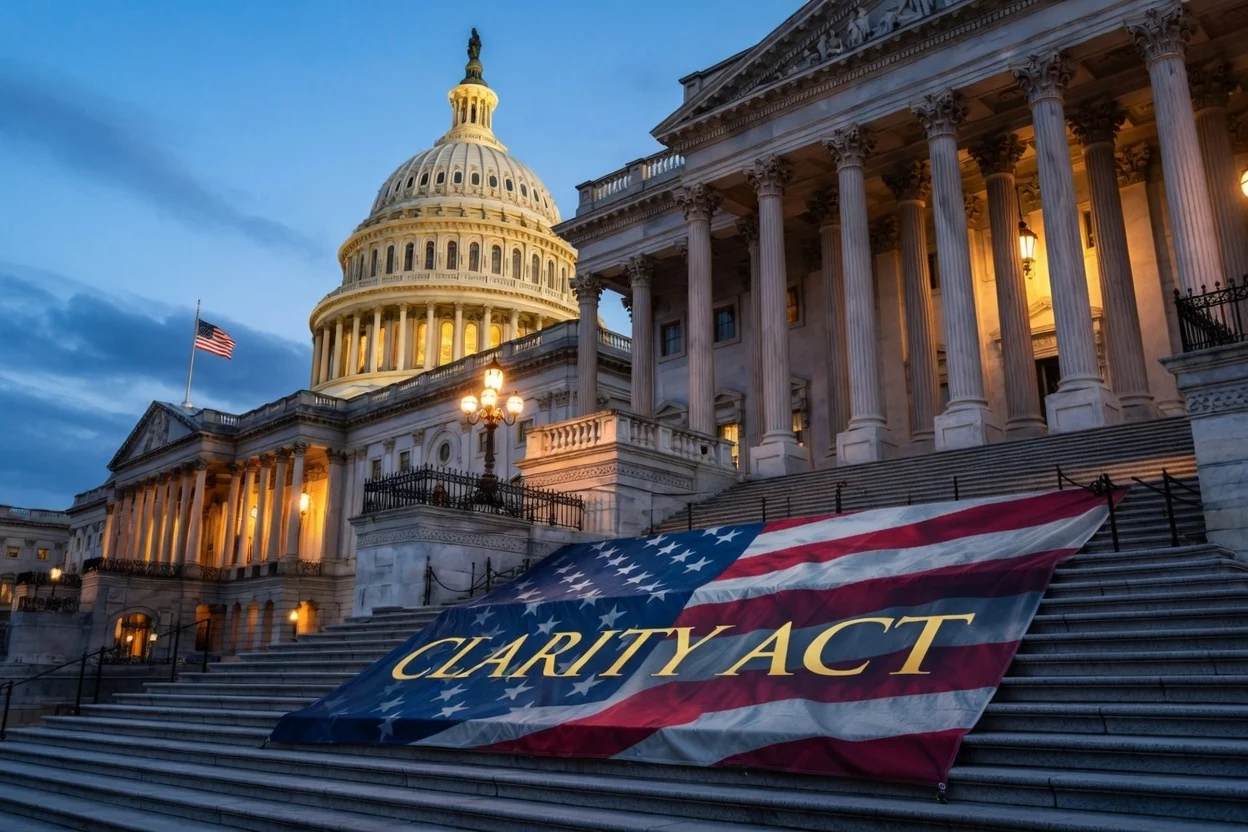
    Grayscale Presses Senate to Advance CLARITY Act Before Break
    Share
    Facebook Twitter LinkedIn Pinterest Email


    TLDR:

    • Grayscale urged Senate leaders to schedule a CLARITY Act floor vote before the August recess, warning that regulatory delays restrict institutional participation.
    • The House passed H.R. 3633 by 294-134, while the Senate Banking Committee advanced the measure 15-9 before sending it toward the chamber floor.
    • Senate negotiations still cover ethics enforcement, stablecoin rewards, developer protections, and counter-terrorist-financing compliance language.
    • Republicans hold 53 Senate seats, so supporters may need at least seven Democratic votes to clear the 60-vote procedural threshold.

    Grayscale has urged Senate leaders to schedule a CLARITY Act vote before lawmakers leave Washington for the August recess. The digital asset manager says delayed market rules restrict institutional participation across crypto products. Its request arrives while Bitcoin trades near $63,002, down 2.69%, with Ether near $1,863. However, no clear price move has been directly tied to the letter. 

    Grayscale argues that pension funds, endowments, developers, and product issuers need predictable federal standards. The firm wants senators to finish negotiations covering regulatory jurisdiction, investor safeguards, stablecoin rules, and developer protections. Financial crime controls must be settled before floor time disappears.

    CLARITY Act Vote Push Meets a Tight Senate Calendar

    Grayscale addressed its request to Senate Majority Leader John Thune and Minority Leader Chuck Schumer. The company said hundreds of thousands of Americans hold its investment products, making the legislation relevant to regulated investors.

    Grayscale Investments, the world’s largest digital asset-focused investment platform¹, just sent a letter to the Senate requesting a floor vote on the CLARITY Act before the August recess.

    “Senators and staff across the aisle have spent months addressing hard questions about… pic.twitter.com/p888ojeWtT

    — Grayscale (@Grayscale) July 31, 2026

    The CLARITY Act would establish federal rules for digital asset trading and supervision. It would divide responsibilities between the Securities and Exchange Commission and the Commodity Futures Trading Commission.

    The House passed H.R. 3633 by a 294-134 vote on July 17, 2025. The Senate Banking Committee advanced it 15-9 on May 14, 2026, sending the measure toward the floor.

    Grayscale said senators have spent months addressing jurisdiction, investor protection, and developer safeguards. “After months of bipartisan work, the industry is ready for CLARITY,” the firm said.

    Republicans hold 53 Senate seats. Most major legislation needs 60 votes to overcome procedural barriers. Supporters therefore need at least seven Democrats if every Republican backs the measure.

    The official Senate calendar lists August 10 through September 11 as a state work period. Nominations, spending measures, and foreign policy matters are also competing for the remaining floor time.

    No formal floor vote had been posted when Grayscale issued its request.

    A Senate-approved version could differ from the House bill. Any changes would require agreement between both chambers before the measure reaches the president.

    Senate Talks Focus on Ethics and Stablecoin Reward Rules

    Negotiators continue to debate ethics restrictions covering federal officials and digital tokens. The dispute includes which authority should enforce those restrictions and whether states should receive enforcement powers.

    Stablecoin rewards represent another difficult issue. Banking groups argue that yield-like incentives could pull deposits from traditional lenders. Crypto companies say broad restrictions could reduce competition and limit product design.

    Lawmakers are also reviewing protections for developers who write non-custodial software. Supporters want the bill to distinguish software creation from financial intermediation. That distinction could affect applications, wallets, and infrastructure developers that never control customer assets.

    Countering the financing of terrorism provisions remain part of the wider negotiations. Lawmakers must balance stronger controls with language that does not treat every developer as a regulated intermediary. The final text will determine how compliance duties apply across exchanges, brokers, protocols, and software providers.

    Treasury Secretary Scott Bessent has pushed Congress to complete the legislation before recess. He recently described negotiations as near the “1-yard line” and urged lawmakers to finish the remaining work.

    Grayscale linked the delay to American competitiveness. The firm said clearer rules in Singapore and Abu Dhabi could attract capital, companies, and technical workers. It argued that stable federal standards would support exchange-traded products, token markets, custody services, and institutional allocations.

    Zach Pandl, Grayscale’s head of research, said uncertainty limits participation from pensions and endowments. Those investors often require settled custody, classification, disclosure, and trading rules before approving allocations.

    Bitcoin, Ether, XRP, Cardano, and Solana traded lower that session. Traders watch whether Senate leaders schedule debate, release compromise language, or postpone action until lawmakers return in September.


    Source link

    Share. Facebook Twitter Pinterest LinkedIn Tumblr Email

    Related Posts

    69% of the Top Agent’s Failures Are Evidence and Reasoning Errors

    November 10, 2026

    How GPT-5.6 Sol Won CyberArena’s Live Attack-and-Defense Benchmark

    November 9, 2026

    Kimi K3.1 Pro Open Weights vs the API: What Each Option Actually Lets You Do

    November 8, 2026

    How a Tensor-Name Test Undermined the 7.72TB “Anthropic” Checkpoint on Hugging Face

    November 7, 2026
    Top Posts

    Tron’s Stablecoin Base Tops $93.5B Amid Slight Pullback, Adding Yield & BTC Dollars

    September 20, 2026

    Hyperliquid Policy Center Launches to Advance Decentralized Finance Infrastructure in Washington

    February 19, 2026

    Satellite, Cellular and What Actually Works Off-Grid

    September 7, 2026

    Welcome to CryptoDispatchDaily.com! Your go-to source for fast, reliable updates from the ever-evolving world of cryptocurrency. Whether it's Bitcoin, altcoins, blockchain breakthroughs, or DeFi trends, we bring you timely insights, expert analysis, and key developments shaping the future of digital finance. Stay ahead with real-time crypto news and in-depth coverage.

    Top Insights

    Cardano core teams near autonomy as IOG names latest partners

    November 10, 2026

    Zcash Activates NU7 With 25-Second Block Target and New Fee Reserve

    November 7, 2026

    Solana Labs Launches Leap Trading App for Tokenized Stocks, ETFs and Crypto

    November 6, 2026
    Advertisement
    • About Us
    • Contact Us
    • Privacy Policy
    • Terms and Conditions
    © 2026. Designed by CryptoDispatchDaily.com.

    Type above and press Enter to search. Press Esc to cancel.